
10 Things to Check Before Buying a Property: The Ultimate Home Buyer’s Checklist
Buying your own home in Navi Mumbai is a massive milestone. Whether you are looking for a peaceful 2 BHK flat in Kharghar or exploring investment opportunities in booming areas like Panvel and Dronagiri, investing in real estate is one of the biggest financial decisions of your life.
However, a single oversight can put your hard-earned savings at serious risk. Before you hand over any token amount or sign a builder-buyer agreement, there are several critical verifications you must perform. If you are a first-time homebuyer or a sharp investor looking for guaranteed returns, this comprehensive guide is for you. Let us dive into the 10 most important things you need to check before buying a property.
1. RERA Registration and MahaRERA Verification
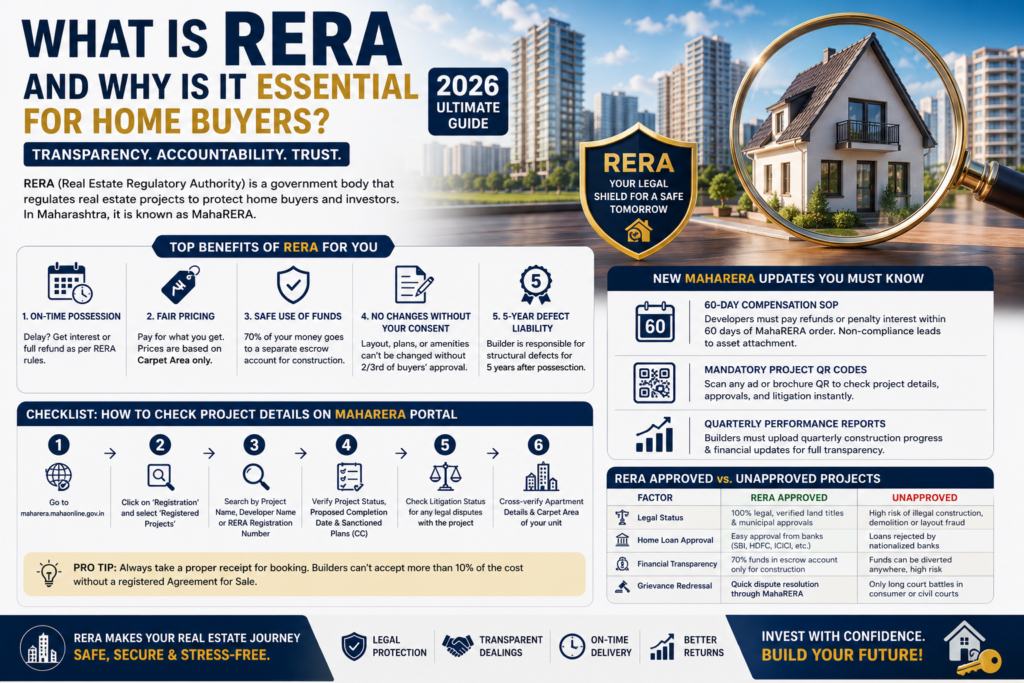
The Government of India introduced the Real Estate Regulatory Authority (RERA) Act to bring transparency and safety to the real estate market. In Maharashtra, this body is known as MahaRERA. Every ongoing, under-construction, or newly launched project must be registered with the authority by law.
When you find a property you like, ask the developer for their unique MahaRERA registration number and verify it directly on the official government portal. Buying a RERA-registered property gives you a legal guarantee regarding the project timeline. If the developer delays the possession, they are legally liable to pay you monthly interest. Never fall for properties advertised as “RERA applied.” Always wait until the active registration number is officially issued before making any financial commitment.
2. Legal Documents and Title Deed Verification
Ensuring that a property has clean legal paperwork is the most crucial step of your home-buying journey. You must check the Title Deed, which is the primary legal document proving whether the person or developer selling the property actually owns the land. It is highly recommended to hire a professional real estate lawyer to trace the past ownership records and ensure the land is free from legal disputes or unpaid dues.
Beyond the ownership history, you must verify the Commencement Certificate (CC) and the Occupancy Certificate (OC). The CC is issued by local municipal bodies like CIDCO or NMMC, giving the builder the official green light to start construction work. For ready-to-move-in properties, never skip checking the OC. The Occupancy Certificate proves that the building has been constructed according to approved plans and is safe for residential living with proper civic connections.
3. Location and Future Infrastructure Connectivity
There is a famous old saying in real estate: Location, location, and location. However, when it comes to Navi Mumbai, you should look beyond the present state of a location and analyze its future connectivity. Navi Mumbai is currently a massive hub for mega infrastructure projects that are guaranteed to transform the region’s economy and lifestyle.
Before finalizing a property, evaluate how close it sits to upcoming transit systems. The Navi Mumbai International Airport (NMIA) is driving massive value to nodes like Panvel, Ulwe, and Kamothe. The Mumbai Trans Harbour Link (MTHL / Atal Setu) has brought places like Chirle and Dronagiri within a 20-minute drive from South Mumbai. Additionally, the Navi Mumbai Metro network has significantly boosted the real estate values in Kharghar and Taloja. Investing in properties near these infrastructure hubs guarantees excellent long-term capital appreciation.
4. Builder Reputation and Historical Track Record
Before trusting a developer with your life savings, you must thoroughly evaluate their market reputation and professional history. Start by checking their delivery record to see if they have historically delivered their past projects on time or if their previous buyers faced prolonged delays.
The best way to judge construction quality is to visit the builder’s older, completed projects. Talk to the residents living there and observe the general upkeep of the building, checking for structural cracks or dampness on the walls. Choosing a financially stable and well-reviewed developer ensures that your project will not get stuck midway due to a lack of funds. Trusted brands like Chaudhary Groups have built their names on structural excellence and absolute transparency.
5. Total Cost vs Hidden Charges
Many first-time homebuyers make the mistake of budgeting only for the “Base Price” or the advertisement price of a flat. In reality, additional mandatory expenses usually increase your final budget by 15% to 20%. You must demand a complete, written breakdown of all additional charges from the developer before making a booking.
First, factor in the Stamp Duty and Registration Fees, which generally amount to 5% to 7% of the property value depending on local government policies. Next, if you choose an under-construction property, you will need to pay Goods and Services Tax (GST), which ranges from 1% for affordable housing to 5% for luxury segments. Ready flats with a valid Occupancy Certificate attract 0% GST. You must also account for Car Parking Charges, which can add a few lakhs to your bill, along with advanced Society Maintenance Deposits collected by the developer for the initial years. Finally, cover development costs like electricity meters, water connection setups, and legal processing fees to avoid unexpected financial stress at the time of possession.
6. Actual Carpet Area and Amenities Quality
Do not get carried away by beautiful artist impressions or swimming pool photos in a glossy brochure. Focus on the actual measurements of the apartment. Under modern real estate rules, you should only pay for the Carpet Area, which is the net usable floor area inside the apartment where you can actually walk or lay a carpet.
Many advertisements highlight the Built-up or Super Built-up area, which includes the thickness of inner walls, balconies, and common areas like lobbies or elevator shafts. This makes the apartment look larger on paper than it actually is. Furthermore, inspect the structural layout and quality of planned amenities. Ensure the building features branded elevators, a functional 24/7 power backup system, and advanced security frameworks like CCTV cameras and intercom facilities.
7. Bank Approvals and Financial Pre-Screening
If you plan to fund your home purchase through a home loan, checking bank approvals is one of the easiest ways to verify a property’s safety. Look closely at whether the residential project is pre-approved by major nationalized and private financial institutions, such as SBI, HDFC, ICICI, or Axis Bank.
When major banks clear a project for retail home loans, it indicates that their internal legal panels have already scrutinized the builder’s land titles, permissions, and corporate background. Buying a pre-approved property minimizes the risk of fraud, speeds up your loan disbursement process, and often helps you secure better interest rates.
8. Resale Potential and Rental Yield
Whether you are buying a home to live in or purely as a wealth-building asset, you should always design a clear exit plan. Evaluate the rental demand in the neighborhood. Nodes in Navi Mumbai like Kharghar, Taloja, and Panvel enjoy high rental demand due to their close proximity to corporate parks, industrial zones, and major educational institutions. A healthy location should ideally yield an annual rental return of 2% to 3% of the property value.
Similarly, consider the resale market dynamics. If your career or family needs require you to upgrade to a larger house or relocate to another city in the future, your property should be easy to sell. Localities backed by strong public transport, wide roads, and commercial markets attract resale buyers much faster and offer higher profit margins.
9. Civic Infrastructure and Reliable Water Supply
Water availability has historically been a critical talking point in certain rapidly developing pockets of Navi Mumbai. Before signing any deal, perform a practical site visit and talk to neighbors about the regular civic infrastructure of the micro-market.
Check if the housing society receives a direct, continuous supply from municipal bodies like NMMC or CIDCO, or if the residents depend entirely on private water tankers. Relying heavily on water tankers significantly inflates the monthly society maintenance bills over the long term. Alongside water, ensure that social infrastructure—such as reputed schools, healthcare centers, supermarkets, and reliable local transport—is functional within a 2 to 3-kilometer radius.
10. Digital Infrastructure and Mobile Network Strength
In today’s digital age, remote work, online education, and digital entertainment are integral to our daily routines. Therefore, digital connectivity is an essential factor to check during your property visits. It is common for modern high-rise towers to experience cellular dead zones where mobile signals drop completely inside the apartments.
When walking through a sample flat or actual site layout, check your phone’s network bars and test your mobile data speed. Additionally, confirm with the developer whether the building features pre-installed fiber-optic cables from leading internet service providers. High-speed, stable internet infrastructure directly supports your lifestyle and safeguards your day-to-day productivity.
Conclusion: Make the Right Move with Chaudhary Groups
Checking these 10 essential factors before buying a property will protect you from unexpected legal hassles and financial strain. Real estate is a long-term journey, and patience pays off. Always lean toward an established developer known for total transparency, legal compliance, and on-time project execution.
Are you looking for a premium yet affordable dream home in the heart of Navi Mumbai? Chaudhary Groups brings you premier, MahaRERA-approved residential projects featuring modern amenities and exceptional connectivity. Contact our expert consulting team today to schedule your site visit and turn your homeownership dream into a secure reality.