
The Transformation of Navi Mumbai: A Goldmine for First-Time Homebuyers and Investors
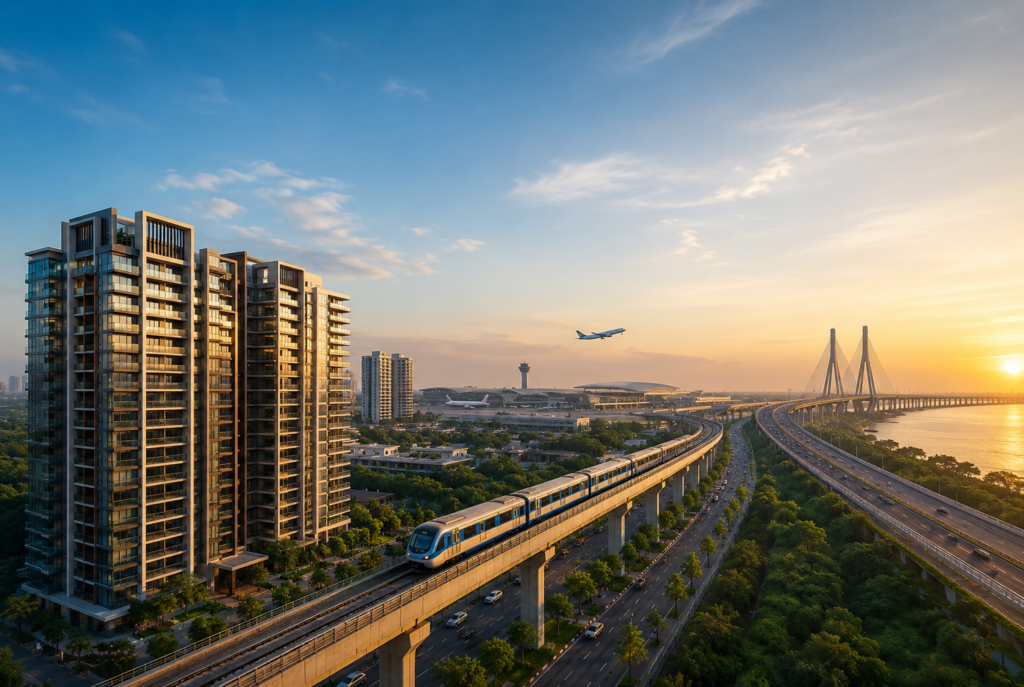
The Big Engines of Growth: Mega Infrastructure Projects
The real estate market moves on connectivity. In the past, people worried about long travel times to main Mumbai hubs. Today, those distances have been cut down to minutes. The transformation is driven by several mega-projects that have transitioned from blueprints to reality.
1. The Atal Setu (Mumbai Trans Harbour Link – MTHL)
The opening of India’s longest sea bridge has completely re-indexed property values in Navi Mumbai. Connecting Sewri in South Mumbai to Chirle near Nhava Sheva, this 21.8-kilometer marvel cuts travel time down to roughly 20 minutes. If you live in nodes like Ulwe or Panvel, you can work in South Mumbai or the Bandra-Kurla Complex (BKC) and return home to a spacious, affordable apartment without the stress of historical traffic jams.
2. Navi Mumbai International Airport (NMIA)
Located in the Ulwe-Panvel corridor, this multi-crore greenfield airport project is nearing its key launch phases. It is designed to handle over 60 million passengers a year. Historically, regions close to major international airports see a 15% to 25% increase in property prices in the months surrounding operational milestones. The commercial development around the airport is creating a massive wave of jobs, drawing thousands of professionals who need local housing.
3. The Expanding Metro Network
Navi Mumbai Metro Line 1 is operational, connecting key nodes like Belapur, Kharghar, and Taloja. It offers fast and affordable daily transit for families and officegoers, bypassing road congestion. Future extensions are planned to link directly to the new international airport, making every metro-connected node highly valuable.
Top Micro-Markets to Watch
Navi Mumbai is not a single real estate market; it is a collection of planned nodes, each offering unique benefits. Depending on your budget and goals, specific areas stand out for investment or end-use.
Kharghar: The Premium Educational & Lifestyle Hub
Average Rates: ₹11,000 – ₹18,000 per sq. ft.
Why it shines: Kharghar is a highly organized, family-friendly node with top educational institutions, golf courses, and central parks. The operational Metro has made internal commuting easy, keeping rental yields strong at around 3.4%.
Ulwe: The Airport-Adjacent Frontier
Average Rates: ₹11,500 – ₹14,000 per sq. ft.
Why it shines: As a direct beneficiary of both the Atal Setu and the new airport, Ulwe is experiencing aggressive transaction velocity. It is a favorite among young professionals and investors looking for quick rental demand from airport and logistics hub employees.
Taloja: The Budget-Friendly Entry Point
Average Rates: ₹6,500 – ₹9,000 per sq. ft.
Why it shines: Taloja provides the lowest entry cost in the region. Thanks to Metro Line 1, it has seen a notable year-on-year price appreciation of nearly 15%, making it ideal for buyers working with tighter budgets.
Panvel: The Affordable-to-Premium Mega Node
Average Rates: ₹9,000 – ₹12,000 per sq. ft.
Why it shines: Panvel serves as a massive real estate zone blending affordable housing with premium townships. Backed by the Panvel-Karjat suburban railway corridor and excellent road access via the Mumbai-Pune Expressway, it offers a secure entry point for first-time buyers.
Smart Checklist for Real Estate Buyers
Before signing your allotment letter, keep these professional tips in mind:
Verify RERA Records: Ensure the project has a valid MahaRERA registration number. Check the portal for past track records, litigation history, and financial health of the developer.
Look Beyond the Brochure: Evaluate the actual carpet area, room layouts, and open space ratios rather than relying on glossy sample flat photos.
Assess Sustainability Features: Buildings with solar power panels, rainwater harvesting setups, and efficient waste management systems keep your long-term monthly maintenance bills low.
Proximity to Transit Hubs: Prioritize homes located within a 15-minute radius of operating metro stations, railway corridors, or major highways to ensure strong resale values.