
Why Monsoon Is Actually the Best Time to Buy Property: 5 Hidden Advantages
Most homebuyers wait for clear skies, festive offers, or the end of the rainy season before they even schedule a property visit. They assume winters or summers are the perfect time for house hunting.
But experienced real estate investors and smart buyers think differently.
As real estate experts often point out, a sunny day can easily hide structural flaws, but the rain never lies. The monsoon season reveals things about a building and its locality that no glossy brochure, premium showroom, or marketing campaign ever can. If you want to make an informed, risk-free investment, a monsoon site visit is your best tool.
Quick Summary: The Monsoon Property Buying Advantage
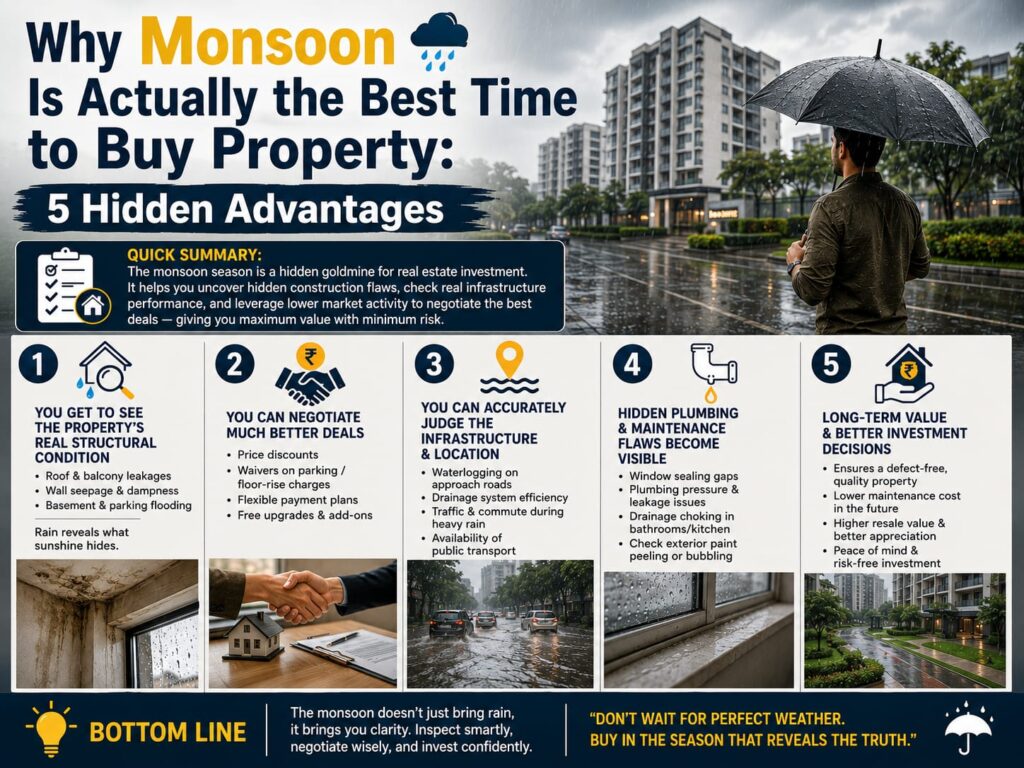
If you are short on time, the monsoon season is actually a hidden goldmine for real estate investment. Heavy rainfall acts as a natural litmus test for a building’s structural integrity, allowing you to easily detect hidden defects like wall seepage, ceiling leaks, and basement flooding. Furthermore, checking the location during heavy downpours gives you an accurate, real-world look at traffic congestion and structural issues like waterlogging on approach roads. Most importantly, because the monsoon is traditionally a lean period for the market with fewer active buyers, developers face higher pressure to meet sales targets. This gives you massive leverage to negotiate better discounts, flexible payment plans, or waivers on parking fees. Ultimately, it allows you to secure the best value with maximum information, completely free from festive season rush and pressure.
1. You Get to See the Property’s Real Structural Condition
A property can look flawless on a bright summer day. Fresh coats of paint easily mask structural cracks, and dry basement floors look perfectly safe.
Rain changes the entire game. The monsoon acts as a natural quality-check for construction. This is the absolute best time to inspect:
Roof and Balcony Leakages: Check if the waterproofing can withstand heavy downpours.
Wall Seepage and Dampness: Look closely at the corners of the rooms and external walls.
Basement and Parking Flooding: Ensure the lower levels of the building have efficient water-pumping systems.
Identifying a construction weakness now protects you from making a faulty, multi-million rupee investment.
2. You Can Negotiate Much Better Deals
The monsoon is traditionally considered a lean period for the real estate market. Footfalls at project sites drop significantly as casual buyers prefer staying indoors.
Because sales slow down, developers and individual sellers are often highly motivated to close deals to meet their quarterly targets. This gives you upper-hand negotiation power. You can easily negotiate on:
Total base price discounts
Waiving off floor-rise or parking charges
Flexible, construction-linked payment schedules
Free internal upgrades (like modular kitchens or premium flooring)
3. You Can Accurately Judge the Infrastructure and Location
A great home in a bad locality is a poor investment. A location needs to perform well in the worst weather conditions, not just the best.
A single site visit during a heavy downpour will tell you more about the infrastructure than any online map or broker’s pitch:
Waterlogging: Do the approach roads turn into rivers after an hour of rain?
Drainage Systems: Does the locality have functioning storm-water drains?
Traffic and Commute: How badly does the traffic crawl during rainy peak hours? Is public transport (auto, metro, cabs) still accessible?
4. Hidden Plumbing and Maintenance Flaws Become Visible
Many internal maintenance issues remain completely invisible until the first heavy spell of rain.
When you tour a property in the monsoon, keep an eye out for these hidden red flags:
Window Sealing: Check if water is trickling inside through gaps in UPVC or aluminum window frames.
Plumbing Pressure: High humidity and rain pressure can expose weak pipe joints and drainage choking in high-rise buildings.
Exterior Painting: See if t